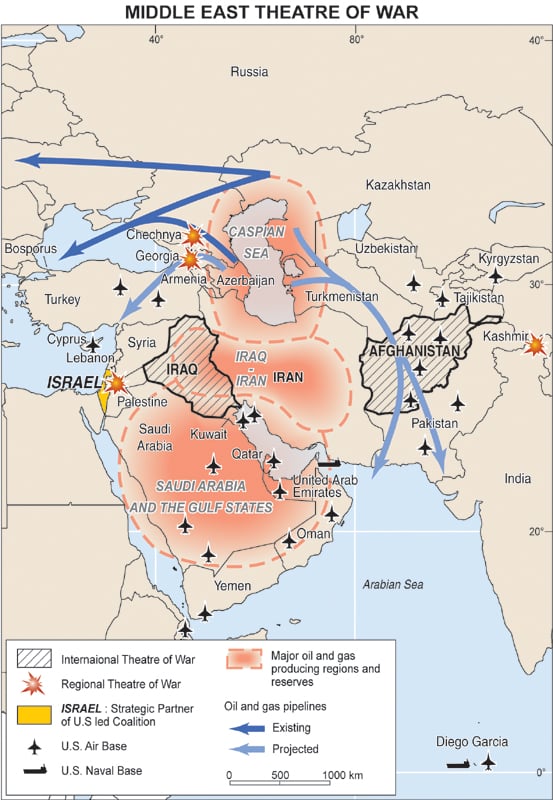
Showing posts with label pipelinestan. Show all posts

Saturday, July 10, 2010

UIGHUR PSUEDO GANG IN PLAY


Turkestan Islamic Party, TIP. Chinese Uighur of Xinjiang. Chinese officials
say ethnic Uighurs trained in Pakistan and Afghanistan by Al Qaeda are aiming to destabilize Xinjiang.

The origins of TIP, based in Waziristan, are murky. The East Turkestan Islamic Movement, ETIM. Rebiya Kadeer, a Uighur businesswoman living in the US.

Turkestan Islamic Party is the same group as East Turkestan Islamic Party, ETIP. They removed the “East”. group’s founder, Hasan Mahsum was killed by Pakistani army in 2003.

in 2008, TIP released a video where a masked Commander Seyfullah was identified


Apr 2009, the US designated Abdul Haq as leader of TIP. The UN made a similar pronouncement. Abdul Haq, also known as Maimaitiming Maimaiti, succeeded Hasan Masum in 2003.

In January 2010, a Predator killed 15 TIP in Waziristan. Some said Abdul Haq was among those killed. There has been an uptick in Qaeda urging Muslims to attack China
2009, Abu Yahya al-Libi, a leading Qaeda figure stated: Chinese forces had massacred Uighurs and would crumble

LUBMIN, GERMANY: GEOPOLITICAL PIVOT


clipped from: niqnaq.wordpress.com


German Chancellors disappear who deviate from Washington agenda. Schroeder was first in opposition to the 2003 US invasion of Iraq, and second, more serious strategically negotiations with Putin for new gas pipeline bypassing Poland.

Today, Nord Stream has reached Mecklenburg-Vorpommern town of Lubmin, a geopolitical pivot for Europe and Russia. Bill Clinton demanded Schroeder, if elected, support a US-NATO war against Serbia in 1999.

By 2005, Bush turned its attention to a successor. Schroeder's last act was to approve Nord Stream from Vyborg to Lubmin. Upon his defeat, he became chairman of Nord Stream AG, a joint venture between state-owned Gazprom and E.ON-Ruhrgas and BASF-Wintershall. He alsoaccused Georgia of initiating the 2008 war against South Ossetia.

In 2006, Poland’s For. Min. Sikorsk compared Nord Stream to the 1939 Nazi-Soviet Pact. The US has used Poland as a wedge to block Russian-German economic and political cooperation. This month, Nord Stream's first pipeline reached Lubmin. The second string will be completed later this month and begins operation in late 2011. It will be the world’s biggest subsea route through Finland, Sweden, Denmark and Germany, avoiding Poland and the three Baltic States.

From Lubmin it will go through Saxony to the Czech border. From there, Other routes to Holland, France and the UK, France’s GDF Suez bought a 9% share, Holland's Nederlandse Gasunie has 9%. It has broad EU support.

a major geopolitical accomplishment with strong US opposition. Nord long-term agreements is with Denmark, the UK, France, Netherlands and Belgium as well as Germany.

Gazprom is advancing South Stream from Russia under Black Sea to Bulgaria and to Italy. South Stream, bypassing Ukraine. from the Soviet era pipelines transited Ukraine. in Jan 2005 “Orange Revolution” brought pro-NATO regime to power. Recent elections has taken a more neutral stance. The offshore part of South Stream is jointly between Gazprom and Italy’s ENI. From there, pre-existing pipelines through Bulgaria will be used.

Washington is applying major pressure on EU countries and Turkey to build Nabucco. To date, little backing in the EU and insufficient gas to fill it.

Completion of the gas line will result in a major geopolitical bond between EU, Central Europe and Russia and a geopolitical nightmare for the US.

US policy since WW2 has been to dominate, first by fanning the Cold War, and then after 1990 by pushing NATO eastwards towards Europe. Europe turning east has been a major defeat for the “sole Superpower”.

Lubmin is now a major geopolitical pivot

Wednesday, June 09, 2010

Kucinich: ‘We may be funding our own killers in Afghanistan’


Get out! Really? "This time Milo had gone too far. Bombing his own men and planes was more than even the most phlegmatic observer could stomach, and it looked like the end for him. ... Milo was all washed up until he opened his books to the public and disclosed the tremendous profit he had made" - re: Milo Minderbinder, from Catch 22. See also: Gen. Frank Kitson's "pseudo gang" strategy & Low Intensity Warfare. In Vietnam it was called the Phoenix Program.

On June 7, the day Afghanistan became America’s longest-ever war, the New York Times reported on an ongoing investigation poised to prove that private security companies "are using American money to bribe the Taliban" to fuel combat and thus enhance demand for their services. The news follows a "series of events last month that suggested all-out collusion with the insurgents," the Times said.

Rep. Dennis Kucinich (D-OH), a leading opponent of the war, wondered, "Is the U.S. paying for attacks on U.S. troops?”

Saturday, April 10, 2010

ENRON INDIA DABHOL


The Dabhol power project, located on the Maharashtra coast approximately 180 kilometers south of Mumbai, is Enron's flagship project in India. Dabhol Phase I, generating 740 MW of power, began operating in May 1999. When Phase II is completed at the end of 2001, Dabhol will generate 2,450 MW of power to become the world's largest independent natural gas-fired power plant.

The Dabhol Power Corporation (DPC). The DPC started as a 100 percent foreign-owned private limited liability company incorporated in India by Enron, Bechtel Enterprises Holdings and General Electric Capital Structured Finance Group. The three partners controlled DPC through a chain of companies based in Mauritius, a tax haven. Enron held 80 percent of the shares of DPC, while Bechtel and GE each hold 10 percent.

See Trans-Afghanistan Pipeline

See Enron Blog

See Coalition of the Obvious

Thursday, April 08, 2010

KYRGYZSTAN


nestled in the shadow of the towering Tian Shan and Pamir mountain ranges. For centuries, it was part of the main Silk Road highway that connected China to the west; the ancient bazaar city of Osh to this day bears traces of its commercial past.

In 751 A.D., near the modern day town of Talas, a vast army sent forth by the Abbasid Caliph of Baghdad defeated an expeditionary force of the Chinese Tang Dynasty. Historians suggest that this decisive battle solidified Central Asia within the orbit of the Muslim cultural world rather than that of China
war prisoners taken to the city of Samarkand to produce a key Chinese invention: paper

Wednesday, December 24, 2008

NABUCCO: HOW TO SAVE EUROPE TEN YEARS FROM NOW... OR... AN EMPTY PIPELINE GOES THROUGH IRAN

.


clipped from: www.robertamsterdam.com


both the upcoming potential supply cut to the West from Russia and the growing monopolization of the oil and gas market place an increased emphasis on the region's most highly prized resource trophy: Central Asia (for example, the central dispute in the Ukraine revolves around the non-transparency of the Russo-Turkmen gas trade).


Western governments and energy companies have one last, grandiose project up their sleeve to secure Turkmen natural gas -- the 2,050-mile, multi-entity project known as Nabucco. Its multiple transit phases and various manifestations would, if constructed, transport energy from the Caspian region, Middle East and Egypt via Turkey, Bulgaria, Romania and Hungary to terminus destinations in Austria and the Central and Western European gas markets. With a current projected price tag of $10.1 billion

Nabucco would be nearly twice the length and triple the cost of BTC.

where the gas to fill it will come from.
initially Nabucco could utilize gas from the second phase development of Azerbaijan's Shah Deniz field beginning in 2013, he acknowledged that this meant a maximum of 13-14 bcm per year. But Nabucco's throughput capacity is projected to be more than double that, at 27-31 bcm, which explains the ardent courting of Berdymukhammedov (Turkmenistan) .


Russia currently supplies one-quarter of Europe's oil and 30 percent of its natural gas, and the Russo-Georgian conflict only heightened concerns in Brussels about the EU's growing dependence on Russian energy imports.

According to Barroso, the plan's "top priority" is developing the Southern Gas Corridor to deliver natural gas to Europe from Azerbaijan, Turkmenistan, Iraq, and Egypt via Turkey. Both the TCP and Nabucco pipelines are an integral part of the scheme.

Aliyev stated bluntly that Azerbaijan alone cannot provide sufficient resources for Nabucco, and that the project depends on the availability of Central Asian gas.

If true, reality trumps the EU's optimism.

Turkmenistan (Berdymukhammedov) has already signed an agreement with China to provide 30 bcm of gas annually, beginning in 2009, in addition to agreements with Russia for 50 bcm and Iran for 8 bcm. Since its annual production stands at about 60 bcm, it has in effect already agreed to provide 28 bcm more than the country produces.

Nevertheless, the planning sessions and discussions for both Nabucco and the Trans Caspian Pipeline continue.

US MISSILES, RUSSIAN GAS AND EUROPE

.


clipped from: www.stratfor.com

Europe gets roughly a quarter of its natural gas supplies from Russia,

Gazprom announced that it would eventually increase prices from the already uncomfortable $420 per thousand cubic meters (tcm) to $720 per tcm.

a decrease in consumption led to the first drop in Russian exports to Europe in a decade — and forced Russia to reconsider its plan.

prices would remain low only for certain customers, meaning that Russia will trade better energy deals for what it wants politically.

Belarus, Ukraine, Slovakia, the Czech Republic and Hungary reportedly have told Gazprom that they could default on payments if they get charged higher prices.
Russia has responded to such defaults by cutting supplies.


January 2006 when Ukraine and Russia were embroiled in a natural gas dispute. Russia cut Ukraine’s portion of the supplies out of its deliveries, which traveled across Ukraine to much of Europe. Ukraine then began siphoning off the supplies heading to Europe, leaving quite a few countries on the tail end of the supplies out in the cold.

Kiev is looking to fill the gap by raising natural gas prices to domestic consumers by 35 percent could trigger a massive response

But Ukraine, Belarus, continually defaults has allowed Moscow to use energy as a major lever in negotiations on every front with Kiev and Minsk

Contracts between EU countries and Russia are supposed to be decided by the European Union as a whole, not by individual states. However, most of these countries are already financially strapped and are considering individually negotiating with Russia.

70 percent of Russia’s exports to Europe go through Slovakia’s system. For Slovakia to be able to handle higher payments to Russia, it can simply charge more for that energy transport.


Czech Republic began feeling Russia’s wrath in the form of decreased oil supplies on the day Prague finalized missile defense plan with the United States. Russia has one thing on its mind when it comes to the Czech Republic: preventing the American missile defense deal.

Hungary is in the most extreme position because it is flat broke. Hungary will most likely turn back to its European allies for either more aid or a solution to the crisis.

This could bring the European Union together in a common stance over its long-debated Russian energy dependence. But even a united front will not create supplies or alternatives, this coupled with Russia’s attempts to deal with each EU country individually, the new energy crisis could skewer the European Union


clipped from: blog.kievukraine.info

Gazprom had warned Monday that its European customers could face a disruption of gas supply due if its dispute with Ukraine led the Kremlin to stop the supply of gas to the former Soviet satellite. Russia provides about a quarter of Europe's gas, and 80.0% of its exports transit through Ukraine.


The companies have until Jan. 1 to sign a new contract, and Russia is pushing for higher prices. Russia has warned that gas prices for Ukraine could rise to $400.00 per 1,000 cubic meters, from the current $179.50.

The Kremlin spent up to $2.5 billion supporting the ruble on Monday, according to TradeTheNews.com, marking the sixth time it has had to do so in December alone.

Capital flight from Russia has meanwhile compelled the country's billionaire oligarchs to ask for loans from the government in exchange for portions of their assets (often companies).

Tuesday, December 23, 2008

BATTLE OF THE PORTS: CHABAHAR VS GWADAR: INDIA VERSUS CHINA: US VERSUS?


clipped from: acorn.nationalinterest.in

The 218-km road connecting Delaram (on the Kandahar-Herat highway) to Zaranj, on the border with Iran has been completed.
It will provide landlocked Afghanistan an alternative access to the sea, the Iranian port of Chahbahar, allowing it to break free from Pakistan’s traditional stranglehold.

it remains to be seen if Iran will prove to be a better neighbour than Pakistan.
For Afghanistan, this is an opportunity to regain better access to the Indian market that it lost in 1947. For India, it is an opportunity to regain better access to Central Asia that it too lost in 1947.

US MILITARY SUPPLY ROUTE TO AFGHANISTAN

The Taliban has all but shut down the Pakistan supply route to Afghanistan. Russian routes are an option. The other option is to use the Iranian port of Chahbahar. The Indian government has spent over $1 billion to construct a multi-lane highway from the western Afghan city of Heart to the Iranian border to meet up with the road from Chahbahar. Some form of political deal with the regime in Tehran would enable the US and NATO to redirect most, if not all, the traffic that currently goes to Karachi—providing they retain control over Herat.


CHINA ALSO HAS A PLAN

clipped from: http://gawadarinnltd.com/page_1161468194468.html

In fact, Gwadar enjoys the status of a third Deep Sea Port of Pakistan which has a special significance with reference to trade links with Central Asian Countries, Persian Gulf, East Africa, United Arab Emirates and North Western India.

The Gwadar project came about as a result of a Sino-Pakistan agreement in March 2002, under which China Harbor Construction Corporation will build the port.

Beijing has provided $198 million for the first phase of the project and Islamabad's contribution has been $ 50 million. The scope of phase-1 includes construction of three multi-purpose berths each 200 meters long and capable of handling vessels up to 30,000 DWT.

By virtue of its excellent location, Gwadar port is also visualized to become a regional hub serving incoming and outgoing commercial traffic of the Middle Eastern and Gulf countries, the Xinjiang province of China, Iran in the west and Sri Lanka and Bangladesh in the south and east.


According to some sources, Beijing also intends to take advantage of Gwadar's accessible international trade routes to Central Asian republics and Xinjiang. The plan envisages extending China's east-west railway from the border city of Kashi to Peshawar.

The incoming and outgoing cargo from Gwadar can then be delivered to China through the shortest route from Karachi to Peshawar. The same road and rail network can also be used for the supply of oil from the Gulf to the western provinces of China.

Additionally, China could also gain rail and road access to Iran through Pakistan's internal road and rail network. Use of Gwadar port by China should accelerate the growth and development of the port and the hinterland and enhance its overall commercial and strategic value.

India is helping develop the Chabahar port and that would give it access to the oil and gas resources in Iran and the Central Asian states, in this it is competing with the Chinese which is building the Gwadar port, in Pakistani Baluchistan.

Iran plans to use Chabahar for transhipment to Afghanistan and Central Asia while reserving the port of Bandar Abbas as a major hub mainly for trade with Russia and Europe.


India, Iran and Afghanistan have signed an agreement to give Indian goods, heading for Central Asia and Afghanistan, preferential treatment and tariff reductions at Chabahar

Work on the Chabahar-Melak-Zaranj-Dilaram route from Iran to Afghanistan is in progress. Iran is with Indian aid upgrading the Chabahar-Melak road and constructing a bridge on the route to Zaranj. India's BRO is laying the 213-kilometer Zaranj-Dilaram road. It is a part of its USD 750 million aid package to Afghanistan.

The advantages that Chabahar has compared to Gwadar are the greater political stability and security of the Iranian hinterland and the hositlity and mistrust that the Pakistani Baluchis hold against the Punjabi dominated Pakistani Federal government. The Baluchis consider Sino-Pak initiative at Gwadar as a strategy from Islamabad to deny the province its deserved share of development pie. They also look with suspicion on the settlement of more and more non-Baluchis in the port area.

The Chabahar port project is Iran's chance to end its US sponsored economic isolation and benefit form the resurgent Indian economy. Along with Bandar Abbas, Chabahar is the Iranian entrepot on the North - South corridor. A strategic partnership between India, Iran and Russia to establish a multi-modal transport link connecting Mumbai with St. Petersburg. Providing Europe and the former Soviet republics of Central Asia access to Asia and vice-versa.

Thursday, December 18, 2008

Monday, December 08, 2008

WHERE HAVE WE SMELLED THIS BULLSHIT BEFORE?


clipped from: www.wsws.org

Condoleezza Rice to the two countries in the wake of the Mumbai terrorist attacks has only added more fuel to the fire

Rice publicly backed India's demands on Pakistan for tough measures against the alleged perpetrators of the atrocity.

reinforced the message that the Pakistani government had to provide "unequivocal assistance" to India.

rash of leaks in the Indian and US media blaming
Kashmiri separatist group Lashkar-e-Taiba

Citing unnamed Indian officials
India had identified Yusuf Muzammil as the man who orchestrated the plan

captured gunmen, Ajmal Amir Kasab, who, it is said, admitted to being a member of Lashkar-e-Taiba and training in Pakistan.

in today's Hindu went one step further to claim that India had "proof" that the Pakistani military intelligence—the Inter-Services Intelligence agency—was involved in the Mumbai terrorist attacks

Significantly, the New York Times yesterday cited an unnamed former US Defence Department official as saying that "American intelligence agencies had determined that former officers from Pakistan's Army and its powerful Inter-Services Intelligence agency helped to train the Mumbai attackers".

No evidence

Several articles have cast doubt on even the basic claims made about the detained gunman
British-based Times noted that Pakistani officials had been unable to trace Kasab to the village of Faridkot in Punjab

contradictory stories in the Indian press variously described Kasab as a small-time pickpocket, an impoverished villager and a well-educated youth fluent in English
President Zardari cast doubt over the identity of the arrested gunman, saying: "We have not been given any tangible proof to say that he is definitely a Pakistani

He blamed "stateless actors" operating throughout the region, and reiterated that Pakistan "itself has been a victim of terrorism and [is] fighting the menace resolutely".

The media leaks, particularly those by US officials, are aimed at undercutting Pakistani disclaimers and reinforcing American demands that Islamabad take action against elements of the military and the ISI who in the past have backed various Islamist militias

In pressuring Pakistan to bow to Indian demands,
The unstable Pakistani government is widely regarded as a puppet of Washington
accusations against the ISI will only compound the tense relationship between the Pakistani government and the military.

concessions by Pakistan
may well be used by opposition politicians to whip up nationalist sentiment.

There is growing outrage that the US and India are exploiting the Mumbai attacks for their own political purposes.

anger over deteriorating living standards as the Pakistani government implements IMF austerity measures as part of an economic bailout package.

the Indian government to take a more belligerent stand against Pakistan.
a growing clamour in the Indian media and from opposition Hindu supremacist parties for tough action

a list of Indian demands, including for Islamabad to arrest and hand over 20 terrorist suspects, most of whom have not even been mentioned in connection with the Mumbai attacks.

President Zardari
New Delhi has provided no evidence against the twenty men
He also insisted that anyone involved in the Mumbai attacks would be dealt with in Pakistani courts

There are growing demands for military action against "terrorist training camps" in Pakistan.

Right-wing Hindu extremist groups are whipping up communal tensions inside India. The fascistic Shiv Sena based in Mumbai has called in its newspaper for the dismantling of "mini-Pakistans" inside India, before teaching "Pakistan a lesson by launching an attack on it". The reference to mini-Pakistanis is a provocative incitement to pogroms against India's large Muslim minority.

the ruling Congress Party, which faces national elections next year, has repeatedly bowed to pressure from the Hindu right in the past.

Completely incapable of addressing the elementary social needs and democratic aspirations of working people, they are again stirring up communal divisions as a means of shoring up their political bases.

The intrusion of the US into this explosive political mixture in pursuit of its own strategic interests—in the first place to consolidate its occupation of Afghanistan—only heightens the danger of war.

MOON OF ALABAMA DRAWS A MAP


At least 75% of all NATO/U.S. supply in Afghanistan comes through the Pakistani port of Karachi (1). Most of it goes up to Peshawar (2) and then through the Khyber pass to Kabul (3). A second route is from Karachi (1) through Quetta (5) to Kandahar (4). A part of the Afghan ring road connects Kabul (3) and Kandahar (4).It is constantly under attack.


PESHAWAR, Pakistan – Militants torched 160 vehicles, including dozens of Humvees destined for U.S. and allied forces fighting in Afghanistan, in the boldest attack so far on the critical military supply line through Pakistan.


To celebrate the arrival of these two asswipes


Humvees are thought to cost about $100,000 each, though the price varies widely depending on armor and other equipment, meaning Sunday's losses may exceed $10 million. "It's militarily insignificant," U.S. spokeswoman Lt. Col. Rumi Nielsen-Green said. "You can't imagine the volume of supplies that come through there and elsewhere and other ways."

100,000 Americans lost their homes today and another 100,000 lost their jobs and its insignificant to Lt. Col Rumi Nielsen-Green.

Lt. Col. Rumi Nielson-Green-another fucking asswipe

BALKINIZATION OF PAKISTAN


Full size version here
Complete version here

Tuesday, October 16, 2007

THEY LOOKED INTO THE SOUL OF PUTIN - AND FOUND AHMADINEJAD

.
.
.

Some of the politics behind the naming of the present Satan, the future Satan, their spawn and other categories of evil.

An article like this doesn't come along very often. The gear of history jumps a cog and is served up without the usual glass of kool-aid.

THE LEAD-UP

1. Rice and Gates left Moscow over the weekend launching an unusually open, harsh and coordinated attack against Putin coupled with various categories of threat including the overthrow of his government through the "color revolution" method which in this case utilizes “human rights activists” generally funded, organized and managed by organizations like National Endowment for Democracy (NED), the George Soros Open Society Institute, Freedom House and Gene Sharp's Albert Einstein Institution, a US intelligence asset used to spark "non-violent" regime change around the world on behalf of the US strategic agenda.

She says,

What the rest of the world hears

The Context

Poland and Czech based US missile defense systems is the *published* bone of contention (the US claims these "treaty busting" systems are needed to protect the "heart of Europe" from Iran (sic), while Russians believe their ultimate purpose is to take down the Russian pipeline monopoly - at least.)

2. Putin responds that he is traveling to Iran to attend the Caspian Sea summit. He will be the first Russian leader to travel to Iran since Josef Stalin in 1943.

As if to emphasize how extraordinary and threatening this is and adding real sizzle to the story, mysterious and "unknown" people from the shadows launch...

3. ...a disinformation campaign advising Putin that there are assassination plots waiting for him in Tehran.

Generally described here, and more explicitly here

4. Putin and Ahmadinejad scoff and respond that they will not be deterred by disinformation campaigns.


From *Tehran* Putin and Summit participants (Russia, Iran, Kazakhstan, Turkmenistan and Azerbaijan) warn...

1. ...the U.S. not to use Azerbaijan (home of the West's BTC pipeline and a former Soviet republic) to stage an attack on Iran.

2. ...and that, countries bordering the Caspian Sea must jointly back any oil pipeline projects in the region. Moscow has strong opposition to U.S.-backed efforts to build pipelines to deliver hydrocarbons to the West, bypassing Russia.

3. ...and while Putin refused to set a date for the start-up of Iran's first nuclear power plant, (already mostly) completed by Russia, he did say, "We are not going to renounce our obligations."

Enrons in the future


US oil companies have huge investments in the Caspian but have to ship their product through the Russian pipeline system. The western owned BTC pipeline alleviates the problem somewhat. Iran is the quickest, easiest and cheapest pipeline exit from the Caspian Sea. Immediately prior to the "Global War on Terror", Enron went bankrupt trying to get Turkmenistan gas by pipeline through Afghanistan bypassing Iran to supply its $3 billion Dabhol Power Plant in India - built by Bechtel, powered by GE turbines - unpaid for - and currently rusting away in Dabhol.

Meanwhile, don't forget the 'NATO of the East' - Shanghai Cooperation Organization

Or this guy,

And, of course, this kind of stuff goes on day in and day out.

And finally, in my search for information surrounding this turn of events I found this.

If you ever want to build a "conspiracy theory" of history, this website is an excellent model - just because you are paranoid doesn't mean they are not really after you.

PHOTO:
From left: Azerbaijan's President Ilham Aliyev, Kazakhstan's President Nursultan Nazarbayev, Russian President Vladimir Putin, Iranian President Mahmoud Ahmadinejad and Turkmenistan's President Gurbanguli Berdymukhamedov walk during the Caspian Sea leaders summit in Tehran, Iran, Tuesday, Oct. 16, 2007. (AP Photo/RIA Novosti, Mikhail Klimentyev, Presidential Press Service)

Tuesday, August 28, 2007

Turkmenistan


STRATFOR

the National Security Council has instead named Deputy Prime Minister Gurbanguly Berdimukhammedov interim president.

home of the world's fifth-largest natural gas supply. Currently, its existing infrastructure is Soviet-era and creaking and it sends nearly all of its natural gas exports -- about 67 billion cubic meters per year -- north and west to Russia. Without those shipments, Russian state energy firm Gazprom would find it impossible to both satisfy domestic Russian natural gas demand and fulfill its export contracts with Europe and Turkey.

Turkmenistan's natural gas fields -- the ones that are currently being exploited and those that have never been touched -- are often pointed to as sources for potential energy infrastructure projects that could send natural gas to South Asia via Afghanistan, or to Europe via a sub-sea Caspian pipeline.

Russia must have Turkmen natural gas to keep its policy of using energy as a foreign policy hammer going; replacing Turkmen supplies would take a decade and tens of billions of dollars in cash that Gazprom simply does not have. This policy is the foundation of Russia's grand strategy, and there is little Moscow would not do to ensure that it gets its way.

For Iran, Historically, invasions of Persia have come from two directions: west and north. Iranian policy vis-à-vis Iraq to the west has masterminded events to turn Iraq into a quagmire for the United States. To secure its north, the majority of Turkmenistan's 5 million people live within a few miles of the Iranian border. An invasion would be logistically simple, strategically sound and impossible for any power to counter.

The United States has a handful of troops outside of Bishkek, Kyrgyzstan, about 1,000 miles away, and its forces in Afghanistan cannot even think of being redeployed. It has tried to secure base rights in Turkmenistan to support its Afghan operations only to be rebuffed by Niyazov himself.

For the past two years, the geopolitical strategies of these two countries -- to tie down the Americans -- have been relatively in sync. But now there is a prize that both desperately want, and one that cannot be easily shared.

Kazakh President Nursultan Nazarbayev, Tajik President Emomali Rakhmonov and Uzbek President Islam Karimov -- are all de facto despots who have gutted the opposition and, as of yet, have not fashioned a clear line of succession. The battle to follow Niyazov's death is just the beginning.

Monday, August 27, 2007

TURKMENISTAN GAS TO CHINA


Second West-East Pipeline Project had been approved by the Chinese government, and that CNPC would be the sole investor.

to go on-stream in 2010. Construction will start in 2008

the Second West-East Pipeline will start at Horgas in Xinjiang and end at Guangzhou in the south and Shanghai in the east

The pipeline will pump natural gas from Central Asia, mainly from gas-rich Turkmenistan.

Turkmen President Gurbanguly Berdymukhammedov.. CNPC and Turkmenistan's national gas company Turkmengaz signed a purchase and sale agreement on natural gas supplies.

Under the deal, the ex-Soviet country will supply 30 billion cubic meters of gas to China annually.

Monday, August 13, 2007

OIL IMPERIALISM


Control of oil

While economists and historians agree that access to important resources has throughout history been a factor in warfare and in diplomacy, oil imperialism theories generally tend to assert that control of petroleum reserves has played an overriding role in international politics since World War I. Further, the use of the word imperialism renders such analyses particularly contentious.

A Possible Solution

A solution to oil imperialism and exorbitant oil prices could be to treat petroleum as an international public utility.

Oil Imperialism and Personal Monopoly

The citizens of most oil exporting nations receive little or no benefit from the sale of their nation's oil. Most of the profit is received by a minority that has political control, and these persons usually are not even involved in the production of oil.

Nigeria is a leading example.

Leverage

Oil producing nations can use oil as a weapon, driving the demand for fossil fuels and hurting those nations that are dependent economically. The ability to produce energy without foreign dependence can provide a measure of energy independence.

See also

  • Dollar hegemony Dollar hegemony is a term coined by Henry C.K. Liu to describe the US dollar in the global economy.
  • Hydraulic despotism
  • Oil crisis
  • Petrodollar warfare The term was coined by William R. Clark, who has written a book with the same title. The phrase oil currency wars is sometimes used with the same meaning
  • Resource curse The term 'resource curse thesis' was first used by Richard Auty in 1993 to describe how countries rich in natural resources were not able to use that wealth to boost their economies and how, counter-intuitively, these countries had lower economic growth than countries without an abundance of natural resources.
  • Renewable energy
  • Iranian oil bourse
  • Chart of exports and production of oil by nation
  • List of oil-producing states


* * * * * * * * * * * *

Pipelineistan
From SourceWatch


Pipelinestan "encompasses Macedonia, Iraq, possibly Iran, Tajikistan, Uzbekistan, Pakistan and maybe a few more 'stans'." [1]

Wednesday, August 09, 2006