Friday, September 15, 2006

WHO KILLED NAWAB AKBAR BUGTI (BOLUCHISTAN): PART TWO


The Government of Balochistan in Exile (Credibility questioned, see Part One)

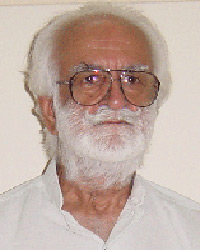
The military dictatorship of General Pervez Musharraf and his supporter, the Muslim Punjabi Raj...They murdered Nawab Akbar Khan Bugti,

a man who firmly believed in peacefully resolving the hostility between the Pakistani occupying forces and the Baloch nationalists.

He was the most important Baloch leader who could have helped Pakistan prolong its occupation of Balochistan, but alas the Punjabi arrogance was blinded by greed of usurping Baloch national wealth and could not wait to patiently negotiate an equitable solution.

...loyalist puppets like Mir Zafarullah Khan Jamali, Jam Muhammad Yousaf, Zubaida Jalal

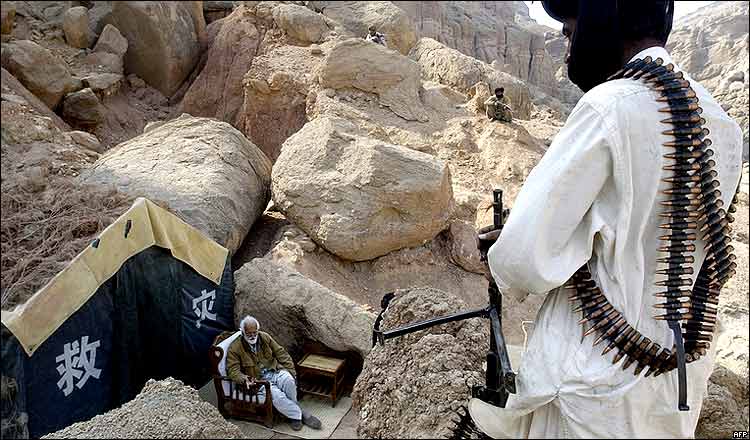
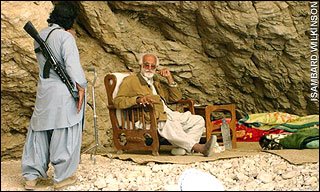
The fact remains that Nawab Akbar Khan Bugti was killed in battle while valiantly fighting the Punjabi-dominated Pakistani armed forces to liberate Balochistan

Fearing that the Baloch people would respond violently if they saw the dead body of Nawab Akbar Khan Bugti or find out how he was killed (perhaps by chemical weapons), the Punjabi Raj put a padlock on his coffin and hurriedly buried him

The brazen Punjabi Raj is once again trying to deceive and confuse the world community by circulating a story that Mir Baalach Khan Marri wanted to settle an old score with Nawab Akbar Khan Bugti, and therefore, got him killed.

They are now trying their best to create a chasm in Baloch unity, which is rapidly gaining strength and momentum.

There is no doubt in anyone’s mind that Pakistan is ready to be Balkanized. The process of disintegration of Punjabi Raj has begun.

Thursday, September 14, 2006

WHO KILLED NAWAB AKBAR BUGTI (BOLUCHISTAN): PART ONE

** The Government of Balochistan in Exile says that News Central Asia is the mouthpiece of Pakistani intelligence organizations **

**Ayesha Tanzeem, BBC Correspondent in New York, Interviews Mir Azaad Khan Baloch of The Government of Balochistan and reports that he is a fraud. However, this interview can only be found on Mir Azaad Khan Baloch's website**

From: News Central Asia

Tariq Saeedi in Ashgabat with Habibullah in Quetta

Ashgabat/Quetta, 14 September 2006 (nCa) --- Some startling bits of information have come to light in the Bugti saga. Among other things, there is the stunning revelation that Nawab Akbar Bugti was a prisoner of Balach Mari.

The fact has also emerged that the army team was trying to negotiate with Bugti in order to evacuate him for medical treatment.

Our story is built on a narrow but dependable base of sources. For obvious reasons, the sources were reluctant to identify themselves publicly.

Several sources, testifying independently, believe that Akbar Bugti was a prisoner of Balach Mari and he did not go to the Karmu Wadh cave complex on his own free will.

There is widespread understanding that Bugti would have preferred to fight to death rather than slink to the safety of a cave.

Some sources say that all of his guards in the caves were from Mari tribe and except for a handful of servants hardly anyone from the Bugti tribe was seen around Nawab Akbar Bugti. No one from Bugti tribe was allowed to approach the cave without personal clearance from Balach Mari.

There is also the truth that many Balochs believe that Maris had not completely forgiven Akbar Bugti for his role in suppressing the Mari tribe uprising during the mid-1970’s. There is strong feeling that Balach may have used the opportunity to settle the old scores.

Some sources from the Bugti tribe maintain that Nawab Akbar Bugti was a spent force. His authority was fragmented at best and there were several younger and well educated contenders to his position.

He was, the sources maintain, a helpless old man and it was not difficult for Balach to manipulate him.

Persons privy to the current orientation and aspirations of BLA (Balochistan Liberation Army) argue that dead Bugti was more useful for the cause of Balach and BLA than live Bugti.

Considered by many an arrogant and fierce serdar but a loyal Pakistani, Bugti was neither the initiator nor the prime mover of BLA. A bipartisan analyst in Quetta said that we must look for a motive in every case and in Bugti’s case only BLA and Balach are the ones that have benefited from his death.

He also said that support for BLA had eroded considerably during the past few months and nothing short of a dramatic incident – such as violent death of Akbar Bugti – would have given BLA a fresh start.

We have also obtained information from reliable sources that the army team conducting operation in the Kohlu area was empowered to conduct negotiations with Akbar Bugti. The package they were allowed to offer Bugti included free medical treatment in any of the medical establishments of his choice in Pakistan.

The fact that the army team was trying to negotiate with Bugti is confirmed by the position of dead bodies recovered from the cave.

From the sequence of bodies found in the cave, it is clear that a colonel was forward-most in the mouth of the cave followed by two majors and one captain. This is not combat formation.

In hand-to-hand combat a colonel – the senior-most officer in this case – would not lead the charge.

In close combat situation the usual procedure is that the command cell stays behind while the especially trained rank and file soldiers together with a junior officer spearhead the assault. No trained commander would alter this procedure when entering a cave with the intent of fighting.

The certainty that some kind of negotiation was in progress between the army team and Akbat Bugti is also supported by the fact that Bugti’s body was recovered not far from where the colonel fell.

After the bodies of the army officers had been recovered, the logistics team had to dig only a few feet inward to reach the body of Bugti. He was the first of the cave dwellers whose body came into sight; all others were either several feet behind him or deep in the cave.

This is not how besieged Balochs would fight.

Akbar Bugti was a frail old man, too weak to carry, let alone use, any weapon. Had there been a scenario of fighting, his gunmen would have been in the front and Bugti would have been deep in the cave.

Some local observers believe that Bugti may have agreed to negotiate; something that was not acceptable to Balach.

While there is no direct evidence, some observers suggest that the explosion in the cave was caused by a remote controlled device. The logical reconstruction of the last moments of Bugti suggests as he moved forward to talk to the army team, someone pulled him from behind and he fell on his back. At the same time, a remote control device was triggered to cause an explosion in the cave that led to caving in of the roof, crushing the army officers and Akbar Bugti to their death.

The questions remain as to who activated the satellite phone and who fired on the army helicopter and why, especially when there were not enough guards around Bugti to protect him?

US GOVT INVOLVED IN SEPT 11 ATTACKS, HUGO CHAVEZ SAYS


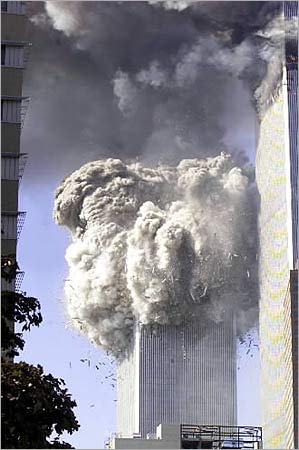
The towers collapsed in less than 9 seconds, so the explosion story couldn’t be written off. The gaps are still numerous in investigation, Chavez said, reasoning the buildings usually fall down this way once they are blown up from inside.

Chavez also doubted that the Boeing could have fallen on Pentagon in a few minutes after the New York tragedy. His argument was the total absence of fragments, even of engines that were made of titanium and usually survive air crashes.

Chavez explained the United States needed the tragedy to justify the attacks on Afghanistan, Iraq and the threat to all of us, including Venezuela, which was the backlash of September 11.

The ardent enemy of the U.S. foreign policy, Hugo Chavez blames on the United States the attempted coup d’etat of April 2002. But the political rhetoric doesn’t prevent Washington from being one of the key economic partners of Venezuela and the biggest buyer of its crude, which production has neared 3 million bbl a day in that state of Latin America.

Monday, September 11, 2006

MEDIA OWNERSHIP

Sunday, September 10, 2006

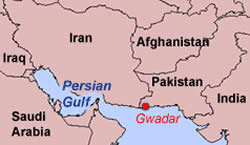
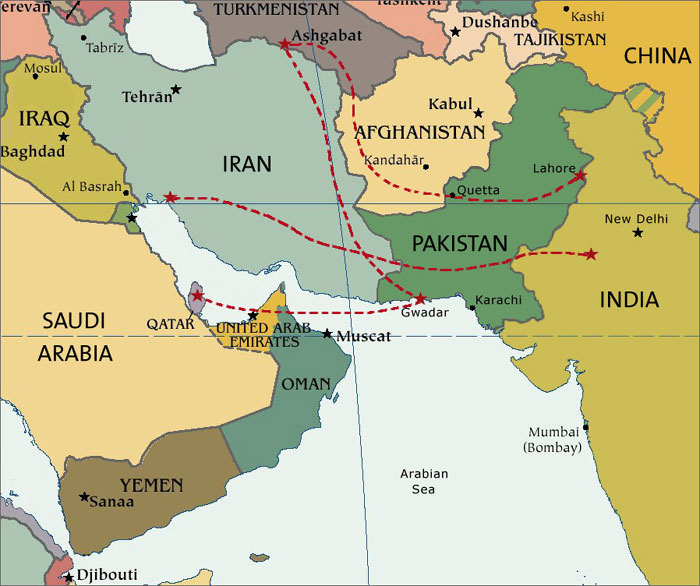
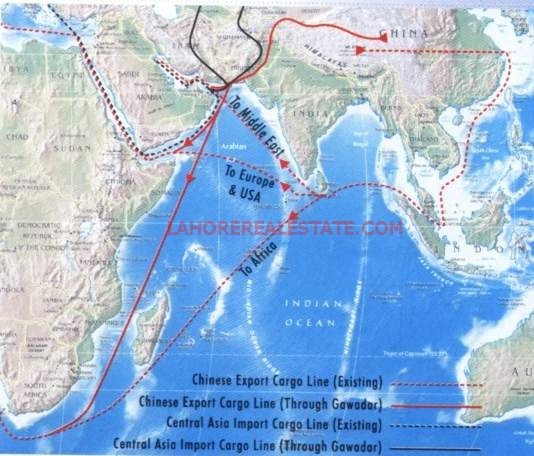
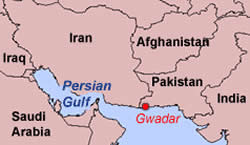
GWADAR: CHINA'S SHORTCUT TO THE MIDDLE EAST


China also has invested another $200 million into building a coastal highway that will connect the Gwadar port with Karachi.

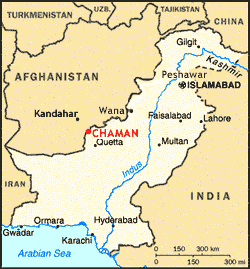
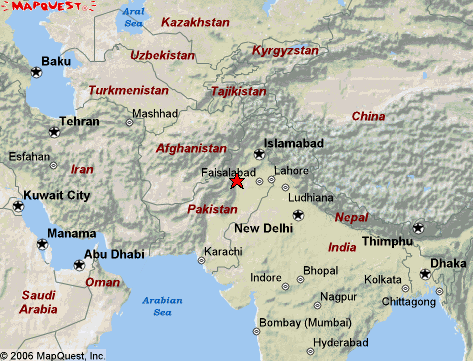
To connect western China with Central Asia by land routes, Pakistan is working on building road links to Afghanistan from its border town of Chaman in Baluchistan to Qandahar in Afghanistan.

In the northwest, it is building similar road links between Torkham in Pakhtunkhaw (officially known as the Northwest Frontier Province) and Jalalabad in Afghanistan.

Eventually, the Gwadar port will be accessible for Chinese imports and exports through overland links that will stretch to and from Karakoram Highway in Pakistan's Northern Areas that border China's Muslim-majority Autonomous Region of Xinjiang.

To counter Sino-Pak collaboration, India has brought Afghanistan and Iran into an economic and strategic alliance. Iranians are already working on Chabahar port in Sistan-Baluchistan, which will be accessible for Indian imports and exports with road links to Afghanistan and Central Asia.

India is helping build a 200-kilometer road that will connect Chabahar with Afghanistan. Once completed, Indians will use this access road to the port for their imports and exports to and from Central Asia. Presently, India is in urgent need of a shorter transit route to quickly get its trade goods to Afghanistan and Central Asia.

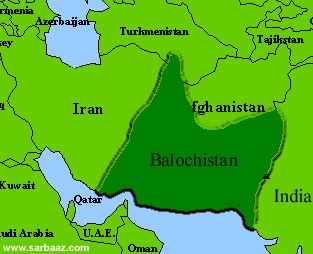
Baluchistan, where the project is located, is once again up in arms against the federal government. The most important reason for armed resistance against the Gwadar port is that Baluch nationalists see it as an attempt to colonize them and their natural resources.

Several insurgent groups have sprung up to nip the project in the bud.

The three most popular are: the Baluchistan Liberation Army, Baluchistan Liberation Front, and Balochistan People's Liberation Army.

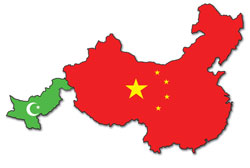
ALLIANCE MAZE: BEIJING-ISLAMABAD STRATEGIC ALLIANCE


Pakistan-China relationship versus the emerging Indo-US strategic partnership.

China is today actively engaged in using its relationship with Pakistan to enhance its influence in the Persian Gulf as well as Central Asia.

Inland, the two countries have agreed to extend the Karakoram Highway (KKH), to connect it with the Central Asian republics.

On the Balochistan coast, China is engaged in building up the Gwadar port, the overbearing strategic importance of which has been ignored even as analysts focus on the project’s economic importance.

The arrangement on Gwadar allows China to sit atop one of the world’s most important SLOCs, the acronym used by strategic analysts for ‘sea-lanes of communication’.

Being at Gwadar means China will only be 250 miles from the Strait of Hormuz, a key channel for the flow of world oil supplies and other commercial merchandise.

Moreover, Beijing will gain direct access to the Persian Gulf.

In the final outcome, the KKH extension and Gwadar port construction allow China to diversify its oil-import routes, as well as make its presence felt in both the Persian Gulf and Central Asia.

Pakistan plans to treat Gwadar as a ‘sensitive defence area’, and has made clear its intention of using the Chinese navy as a ‘forward defence’ against any maritime hostility.

The most direct impact of the Gwadar port will be on the United States.

Moreover, its maritime cooperation with India in the Arabian Sea was developed to achieve exactly what Pakistan and China are attempting through Gwadar – ie, to enhance their sphere of influence to oversee the shipping activity and the ‘great game’ of oil flows from the Gulf.

It is clear that Washington DC is not happy with the Gwadar arrangement, and internal Pentagon memos point to the Chinese presence as a worrisome factor.

Some reports even indicate a US hand in the troubles in Balochistan, linked to Washington DC’s opposition to both the port project and proposed oil and gas pipelines from Iran.

Pakistan has indicated that it is prepared to be at the centre of an energy grid that extends to China.

There are already significant moves by India and the US acting in concert to help develop alternate port facilities in the Gulf in order to divert traffic from Gwadar.

The US is desperate to undermine Gwadar and all that this port project represents. There is a suggestion that the US might use India to lead the initiative to revitalise the Iranian facilities while turning a blind eye to the development.

China will continue to build stronger ties with Pakistan, and from time to time it will signal to New Delhi and Washington DC the importance it places on its relationship with Islamabad.

Islamabad should expect significant moves from the opposing camp to undermine its arrangement with Beijing. Targeting Pakistan’s internal fault-lines would be one way of doing that. Involvement in the Balochistan crisis could serve this interest, and the lingering Waziristan conflict could also be used to keep Pakistan unstable.

For Pakistan, internal stability comes above all else. For one, peace in Balochistan is essential for the progress on the Gwadar front.

GWADAR: THE REPLACEMENT FOR DUBAI


Gwadar by virtue of its finest location, development projects, recreation programmes and Government’s special attention, will soon turn into a city which will be comparable with cities like Singapore, Hong Kong and Dubai.

Dubai is the hub of business not only for Gulf but also for rest of the world including Europe, United States, Africa, China and Central Asian States, simultaneously. The gulf region is facing many political conflicts at the moment and huge disturbances in the current administrative structure are expected in the coming years. In such a scenario, a substitute of Dubai is essential to be located before the crisis hits the finances of millions. The substitute shall be a nearest point probably, to ensure continuous supply line of oil from Gulf to the outer world. Fortunately, Gwadar proves to be the nearest and infact more cost-effective substitute of Dubai, from many aspects.

China is emerging as a super economic power of the world in the recent years. Despite occupying a huge area of world\'s land, it doesn\'t have any port of hot waters, which can be used the whole year. The distance of Chinese industrial approach to the Shinghai port is approximately 16000 km and the sea travel of 2-3 months is additional. This costs them a lot in the form of taxes and duties as well. As compared to this, Gwadar port is only on a distance of 2500 km from China and the port is working for the whole year because of the hot waters here. Therefore, the interest of China in the development of Gwadar port is infact in the interest of Chinese economy.

The central Asian states, after the independence from USSR, are trying to develop their economies. These states are land locked and Karachi was expected to provide them the services through Afghanistan. For the purpose, a highway from Peshawar to Karachi was constructed but due to Afghan crisis, this line couldn\'t be established. The Afghan situation is till not clear, so, Gwadar being near to Iranian border will provide port facilities to Central Asia as well.

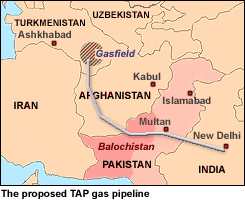
Trans Afghan Gas Pipe Line

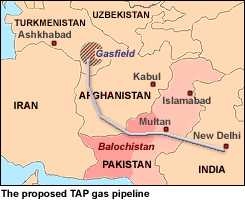
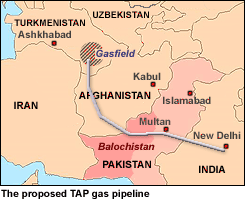
The 1400km-long Trans-Afghan Gas Pipeline (TAP) from Turkmenistan to Gwadar (Pakistan), the long dormant project that hopes to pump Turkmen natural gas to markets in South Asia, is finally poised to step off the drawing board costing $3 billion.

THE "MAKRAN COASTAL HIGHWAY" PROJECT (National Highway N10)


The Makran Coastal Highway project will help in establishing better commerce and trade relations with the neighbouring countries of Pakistan, particularly, the central Asian republics

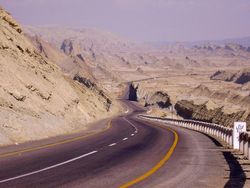
Pakistan has a coastal belt of about 800-km from Karachi to the international border with Iran. The portion from Hub near Karachi up to Jiwani is called Makran Coast. There are small ports of Ormara, Pasni, Gwadar and Jiwani along the coast.

Before last year, only a dirt track existed along the coast, "The development of Gwadar Port and infrastructure along the Makran Coast is key to boost the national economy," said Brig Shabbir Ahmed, Commander, Frontier Works Organisation (FWO), which is constructing the two sections of the highway.

The journey time has now been reduced to six or seven hours with the construction of the new Makran Coastal Highway (National Highway N10). The highway was built as part of an overall plan to improve transport facilities in southern Balochistan; other parts of the plan include the new seaport and international airport at Gwadar and the construction of a road linking Gwadar to Khuzdar.

The spokesman in a press statement issued here on Saturday said that the present government has awarded all construction contracts for Gawadar Deep Sea Port and Makran Coastal Highway which had seen shelved by both the pervious regimes. It was only the commitment and dedicated pursuits of the President Gen Pervez Musharraf that two mega projects have been materialized, he added.

The spokesman clarified that the idea of Gawadar Deep Sea Port was conceived during the first term of Nawaz Sharif in 1993 but remained shelved even during his second term. Even the Benazir government did not touch this project due to non-availability of financial resources, he said.

The present government took up the issue as one of its priority areas and the Ministry of Communication signed an agreement with Chinese government in August 2001, under which Chinese government will provide US $198 million for development of Gawadar Deep Sea Port phase-1 while Pakistan will contribute $50 million.

GWADAR: Minister for Communications and Railways Lt Gen (r) Javed Ashraf Qazi on Saturday said Makran Costal Highway will make Pakistan a hub of regional trade activities and promote trade links with the Economic Cooperation Organisation (ECO) states.

He said, ports of Ormara, Pasni, Gwadar and Jewani are located along the costal belt and that construction of costal highway will pave the way for trade activity at three ports.

The journey time has now been reduced to six or seven hours with the construction of the new Makran Coastal Highway (National Highway N10). The highway was built as part of an overall plan to improve transport facilities in southern Balochistan; other parts of the plan include the new seaport and international airport at Gwadar and the construction of a road linking Gwadar to Khuzdar.

Saturday, September 09, 2006

THE KARAKORAM HIGHWAY (KKH)


Karakoram Highway '99 - Pakistan, KKH: Khunjerab Pass - Passau

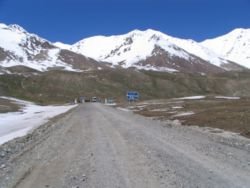
The highest point on the highway: the Khunjerab Pass

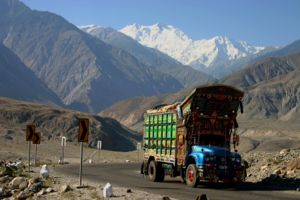
The Karakoram Highway (KKH) is the highest paved international road in the world. It connects China and Pakistan across the Karakoram mountain range, through the Khunjerab Pass, at an altitude of 4,693 metres (15,397 feet), by far the highest paved international border crossing in the world. It connects China's Xinjiang region with Pakistan's Northern Areas and also serves as a popular tourist attraction.

On June 30, 2006, a memorandum of understanding was signed between the Pakistani Highway Administration and China's State-owned Assets Supervision and Administration Commission (SASAC) to rebuild and upgrade the KKH. According to SASAC, the width of the highway will be expanded from 10 meters to 30 meters, and its transport capacity will be increased three times. As well, the upgraded road will be constructed to particularly accommodate heavy-laden vehicles and extreme weather conditions.

China and Pakistan are also planning to link the Karakoram Highway to the southern port of Gwadar in Balochistan through the Chinese-aided Gwadar-Dalbandin railway, which extends up to Rawalpindi.

OPIUM BUMPER CROP SEEN TO BENEFIT TALIBAN


Taliban Going 'Where the Money Is'

When in power, the Taliban's ultra-
orthodox inter
pretation of Islam led it to crack down mercilessly on heroin production. The U.N. noted Afghanistan's poppy output in 2001, for instance, was negligible.

But now, there is increasing "anecdotal evidence" that the Taliban are "going where the money is" and using "narco funds," said Thomas Schweich, a State Department expert on international narcotics.

For example, the Afghan province with the highest poppy output — the Helmand area — is a Taliban stronghold. Although the U.S believes that only 8 to 10 percent of Afghan farmers are involved in poppy cultivation, the Helmand province is the source of up to half of the world's heroin.

And who gained the most? The Taliban.

The most dramatic increases in cultivation took place in five southern provinces where the anti-U.S. insurgency has spiked.

In Helmand province, where Taliban ties to the drug trade are most clear, poppy output grew 162 percent. And Helmand was the province that last year produced a whopping 40 percent of Afghanistan's $2.8 billion poppy crop.

I travelled to Helmand in April, when the poppy was flowering, and it was one of the most incredible sites I have seen. Poppy flowers are stunningly beautiful, and they were everywhere. I drove for hours; nary a moment passed that I was not driving through a poppy field.

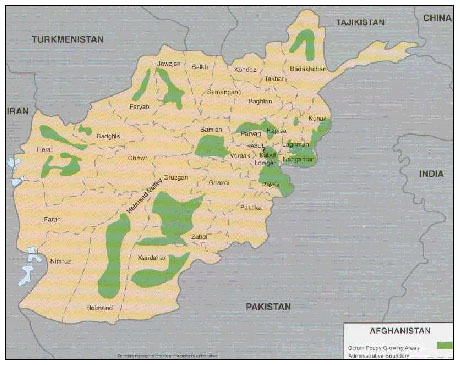
Last Photo: Poppy growing areas.

THE CENTRAL TRUTH: "WHY DONT WE JUST GIVE IT SIX MORE MONTHS?"


To listen to the latest..., you’d think that our biggest problem...

...I wish it were so. Unfortunately, we are in trouble in Iraq now not because...

Let me explain: We are stalled in Iraq not because of something...

While they told the public — correctly, in my view — that...

Early in the Iraq war a prominent Sunni Arab leader said to me privately, “Thomas, these Shiites, they are not real Muslims.”

But before we throw up our hands on Iraq, why not make one more big push to produce...a self-sustaining, unified Iraqi democracy.

Friday, September 08, 2006

THE TALIBAN SCORE BIG IN PIPELANDISTAN


**The Taliban are operating out of safe bases in Baluchistan, particulary the capital, Quetta**

AFGHANISTAN:
'Taliban Taking Over'
Sanjay Suri

LONDON, Sep 5 (IPS) - The Taliban have regained control over the southern half of Afghanistan and their frontline is advancing daily, a group closely monitoring the Afghan situation said in a report Tuesday.

The report on the reconstruction of Afghanistan marking the fifth anniversary of 9/11 is based on extensive field research in the critical provinces of Helmand, Kandahar, Herat and Nangarhar.

"The Taliban frontline now cuts halfway through the country, encompassing all of the southern provinces," the Senlis Council report says. The Senlis Council is an international policy think tank with offices in Kabul, London, Paris and Brussels.

Some 20,000 NATO soldiers and a similar number of U.S. forces are in Afghanistan trying to crush an emboldened Taliban insurgency. The heaviest fighting takes place across vast desert plains in southern Helmand and Kandahar provinces, also center of the country's massive opium trade.

'I think the development in Afghanistan now is at a tipping point; it could go either way,' Rolf Tophoven, a German terrorism expert, recently told United Press International in an exclusive interview. 'The Taliban have come back better equipped... We know that because of the type of bombs now used there, and the types of ambushes that are set. The Taliban now fight against battalion-sized international units.'

He added the focus of insurgents had moved from Iraq to Afghanistan.

The situation is most critical in the southern provinces of the country, around Kandahar, where British, Canadian and Dutch troops are facing an ever-mounting death toll.

A PIPELINE FROM 911 TO BALUCHISTAN


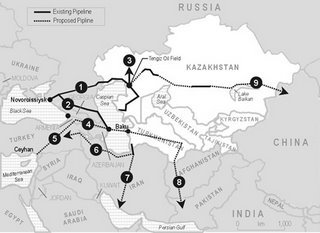
1. The Caspian Sea Basin (Kazakstan, Turkmenistan etc.) holds between 11 and 12 TRILLION dollars in oil and gas resources
2. There are only three ways to get it out:
- East to China
- West through Iran, Russia, and Turkey to Europe
- South through Afghanistan and Pakistan
3. The Taliban who controlled Afghanistan before 9/11 made pipeline deals with non-US companies (Bridas & Unocal) and refused to change them to give control of the region's resources to the US


The port at Gwadar is without doubt currently Pakistan's flagship infrastructure project. A source of great pride for the Pakistani government, its much anticipated inauguration as the country's energy hub has been twice delayed and it is envisaged to become operational by year's end.

Built with Chinese assistance - just how much is debatable, though US$200 million for the first phase is an accepted figure plus loans - this multibillion-dollar scheme is regarded as not only an important economic asset but also a strategic one.